
By Cameron Sheath
After Arsenal once again had to rally for a deserved win over Lille on Tuesday night, the Champions League threw up some brilliant entertainment on Wednesday. City’s comeback attempt made things interesting against PSG, even if I was enjoying the French side’s first-half onslaught with all the blood lust of a spectator at the Colosseum.
There must be a large degree of jealousy from City’s owners when looking at PSG, the back-to-back Champions League winners who were built in much the same way as City, but seem to be completely in the clear. Either way, the game reminded me of one of the overlooked victims of City’s misdoings.
Reigning Italian champions Inter have lost two of the last four Champions League finals, both to teams owned essentially by nation states, including an agonizing 1-0 loss to Pep Guardiola’s City in 2023. There has been much said of the domestic victims of City’s cheating, but winning a Champions League is something that lives on forever, and Inter will likely feel even more aggrieved than some English clubs about the recent findings.
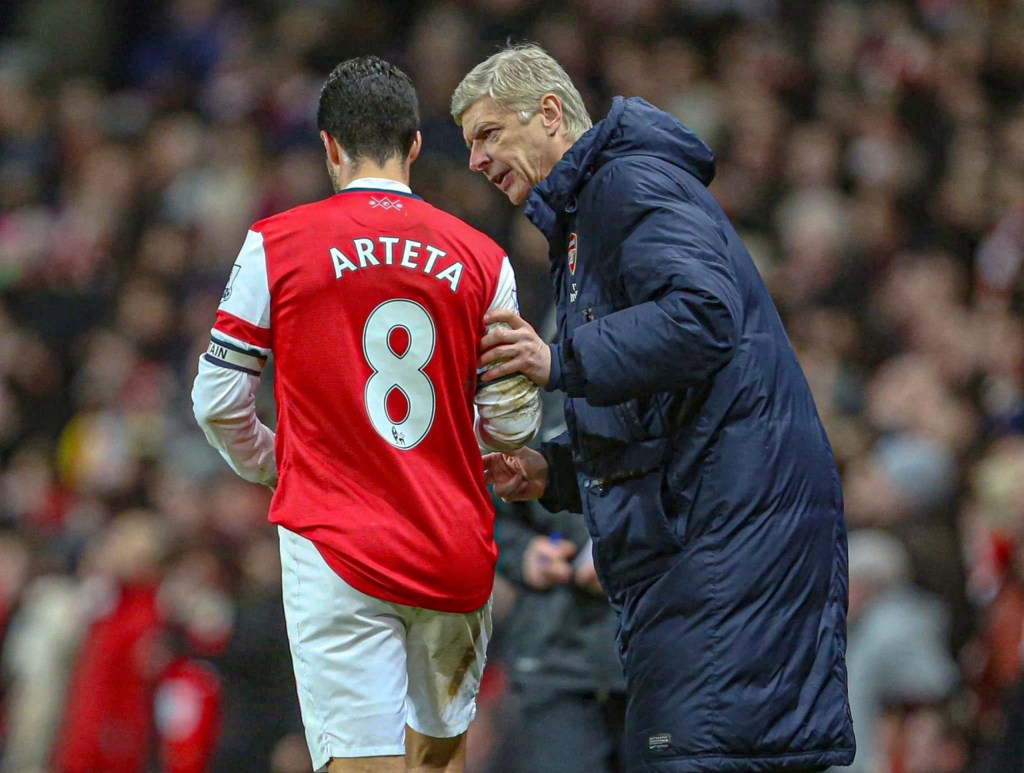
Back to Arsenal, though, and I thought I’d touch on the task Mikel Arteta has when it comes to bringing through the club’s rising young stars, starting with a look back to the last time we were in this position.
Diluted Leadership
In August 2004, a 17-year-old Cesc Fabregas made his Premier League debut for Arsenal, having just starred in a 3-1 win over Manchester United in the Community Shield – a game I was fortunate enough to attend. The young Spaniard was playing in place of the injured Patrick Vieira, and manned the centre of the field alongside Brazilian Gilberto Silva.
From his central position, the teenager could turn in any direction and see a player already etched for eternity into Arsenal and Premier League history. Though Vieira and Sol Campbell were missing, Fabregas lined up alongside Lauren, Silva, Kolo Toure, Ashley Cole, Jens Lehmann, Freddie Ljungberg, Thierry Henry, Jose Antonio Reyes, and Dennis Bergkamp in a 4-1 win away at Everton.
Robin van Persie was signed from Feyenoord ahead of that season, and alongside Fabregas had a crash course in the kind of determination, professionalism, and quality that goes into a truly great team. They say that you become the average of the five people you spend the most time with, and those two young stars couldn’t have landed in a better spot in that sense.
Unfortunately, the move to the Emirates Stadium meant breaking up that historic team so soon after achieving the unthinkable, a sacrifice that fuels much of the anger currently directed at City from an Arsenal perspective. One by one, Arsenal’s legendary group of champions departed, leaving Fabregas, and then van Persie, to carry the torch.
Both players would give many great years for Arsenal and both would go on to be named captain, but as more Invincibles left the club, the more detached it became from that elite era. Wenger built another strong team for the 2008-2009 season, with a young Aaron Ramsey and Samir Nasri joining in the summer, before Andrey Arshavin was brought crashing in through a window that had already closed that February.
The team finished fourth that year, but made a Champions League semi-final and introduced both Ramsey and Jack Wilshere to the fray. Unlike Fabregas and van Persie, though, Arsenal’s newest generation wouldn’t be learning from the best to ever do it.
In the following years, rather than grow with experience, Arsenal’s squad was picked apart by its rivals. City swooped in for Bacary Sagna, Emmanuel Adebayor, Samir Nasri, and Gael Clichy. Fabregas and Alex Song were both pinched by Barcelona, before van Persie traded in his Arsenal legacy for silverware at Manchester United. Even the team’s mercenary leaders such as William Gallas, Sol Campbell, and Jens Lehmann (the latter two upon their underwhelming, yet necessary, free-agent returns) were rotated on an almost yearly basis.
The stadium move gutted Wenger’s team of it’s winning culture almost overnight, something the Frenchman was never able to recover from. When you add to that the vulture-like approach from rivals as the team threatened to rise from the ashes, it puts the second-half of Wenger’s tenure into perspective.
For anyone who has watched the Last Dance documentary on Netflix, about Michael Jordan’s Chicago Bulls team, they’ll remember Jordan’s frustration at that team being broken up while it was still at the top. Wenger once said that Henry was football’s equivalent of Jordan, and looking back, it’s impossible not to view the Invincibles as football’s equivalent of that Bulls team.
A Second Chance
I was initially excited by the recent murmurings of an Emirates Stadium expansion, and I’m still hopeful that an 80,000-seater home will one day become a reality. However, given the untimely nature of the initial move, it would be unbelievably cruel timing for the club to embark on a similar project with the team having only just clawed its way back to the top.
After 22 long years, Arsenal have reached the other side, and a new generation of promising young talents are learning their craft among some of the very best players that world football has to offer. Max Dowman, Ethan Nwaneri, Myles Lewis-Skelly, and Marli Salmon are all good enough to forge long careers at Arsenal, and all are being forged in the fires of Arsenal’s ultra-competitive squad.
While Nwaneri is currently enjoying plenty of first-team football in Germany, he has spent enough time around this Arsenal team to understand the demands. The fact that he is at Dortmund in the first place is due to the ridiculous amount of talent at Arteta’s disposal.
The manager now faces the task of juggling multiple timelines at Arsenal. The aforementioned young stars will hopefully dominate the Premier League as integral parts of Arsenal teams yet to be constructed, but they won’t get there unless they are given room to grow. Meanwhile, the need to get the most out of his current team is paramount, with multiple titles well within reach in the immediate future.
While Wenger was forced to accelerate the evolution of his legendary Arsenal side, Arteta doesn’t have the same financial burden that his mentor did. So what does a successful transition look like for those young talents, as the manager looks to preserve a team to dominate now, while simultaneously nurturing Arsenal’s emerging generation?
Integration
Per Transfermarkt.com, Kai Havertz, Martin Odegaard, Declan Rice, Jurrien Timber, Ben White, and Mikel Merino all have contracts running until the end of next season. Reports suggest that Rice will be the first of those to renew, with an announcement expected before too long. Timber and Odegaard should also be expected to extend their stays in North London, but the futures of Havertz, White, and Merino are less clear.
White will be 30 years old when his current contract expires, making him a player to watch heading into next summer. Merino is already 30, and is one of the players currently keeping the likes of Nwaneri and Dowman at arm’s length from any meaningful action at the club. Both starlets have been tipped to succeed or rival the captain in his right eight position, and Merino’s departure would be a step in that direction.
To be clear, Merino is my favourite player at Arsenal; true appreciation for his blend of class and grit continues to be undermined by his super-sub reputation. Regardless, Arsenal have made a point of needing to sell more effectively, and a rotational piece in his thirties, who has multiple young talents behind him, is a sensible sell.
White moving on would pave the way for Salmon to step up, albeit that Arteta may prefer for him to get some senior experience elsewhere before that happens. Both Salmon and Konsa are far better on the ball than Mosquera, making either a rotational option at right back, especially with Saliba still to return.
The biggest potential problem is that Nwaneri and Dowman seem to be on a collision course, with Odegaard standing in the middle. Tuesday’s win over Lille, though, exposed a lack of players who want to get on the ball and dictate things when Odegaard isn’t there, and so there are far worse problems to have. And given the talent they both have, it would surely be in Arsenal’s long-term best interests to clear a path for both players, even if it means moving one of them out wide.
Odegaard, Rice, Bruno Guimaraes, and Gabriel should all have at least another half-decade of top-level play to offer, while the likes of Saka, Saliba, Timber, and Calafiori are all still in their mid 20s. This leaves Arteta with a solid window in which to integrate Arsenal’s next generation, with plenty of transfer activity in both directions along the way.
Arsenal were robbed of some golden years in the mid-2000s. Nothing will ever get those years back, and there will likely never be another Invincibles, but Arteta has an unbelievable opportunity to build on his recent success in a way that Wenger simply couldn’t.
I’ll be back with another blog post on Monday, but there’ll be plenty of content around Sunday’s trip to Nottingham Forest, as well as some other bits. To keep up, you can subscribe, for free, by following the link at the bottom of the page.


Leave a Reply